Labels

Showing posts with label classroom game. Show all posts

Thursday, May 2, 2013

Classroom game: 'Cher Says

So here's the story. For the 2-day Freshman Orientation event a few weeks ago, I was asked to give an administration briefing to a lecture theatre of about 400 eager freshmen in the morning of the first day. The purpose of the briefing was mainly to inform the freshies about the agenda for the next two days. However, there was a concern that the programme that morning might be too short, so I casually mentioned that "at worst, I could run a game."

Next thing I knew, the official programme schedule says Administrative Briefing & Games, and I was committed to running a game for 400 people. Jaw. Drop.

The red ellipse represented the bloodbath that would occur if the game fell flat.
There aren't many games that can accommodate 400 people, and even fewer in a restricted environment like a lecture theatre. The students will be seated in rows with classmates that they have just met, clutching their goodie bags and wondering what exciting thing is going to happen next. I needed a game that could keep everyone involved (or at least interested) for maybe 10 minutes, which doesn't sound like much until you realize that we're dealing with a bunch of impatient, worldly and cynical 17-year-olds.

There was really only one choice. I was going to have to try a version of Simon Says.

'Nuff said.
(source: http://backseatcuddler.com/wp-content/uploads/2008/05/simoncowell.jpg)
If you've gone through kindergarten or been to one of those kiddie birthday parties with balloons and clowns, then chances are you know the rules of Simon Says. On the off chance that you've had a deprived childhood, the rules are as follows. One person plays the role of Simon, and he gives a series of instructions. If he gives an instruction preceded by "Simon says," then the players must follow the instruction without hesitation (e.g., "Simon Says, raise your right hand."). If the instruction is not preceded by "Simon says,", then the players must do nothing and maintain the previous position (e.g., "Raise your left hand."). Anyone not following these rules is out, and the last one remaining wins the game.

Sounds like a boring kids' game, right? Well, educators have recommended Simon Says as a good game to teach children how to follow instructions, improve their concentration, practice logical thinking and motor skills...oh, who am I kidding? I want to run Simon Says because it gives me the chance to be a troll (or, more accurately, it gives me a chance to trololol).

The success of a game of Simon Says depends completely on the instructions given by Simon. If the instructions are boring, the players get bored. If they are unfair, the players get resentful. The key is to design the instructions with misdirection in mind so that as the players drop out, they realize their error and are impressed by the deviousness of the instructions. Hopefully, they will continue to pay attention to the rest of the game in order to figure out what trollish trick I was going to play next.

The game I played is identical to Simon Says, except that I called it 'Cher Says because, well, my name is not Simon (it's 'Cher). Also, I stated that the game is active only when the Scumbag Steve cap is on the screen. After I explained the instructions, I started the game. 
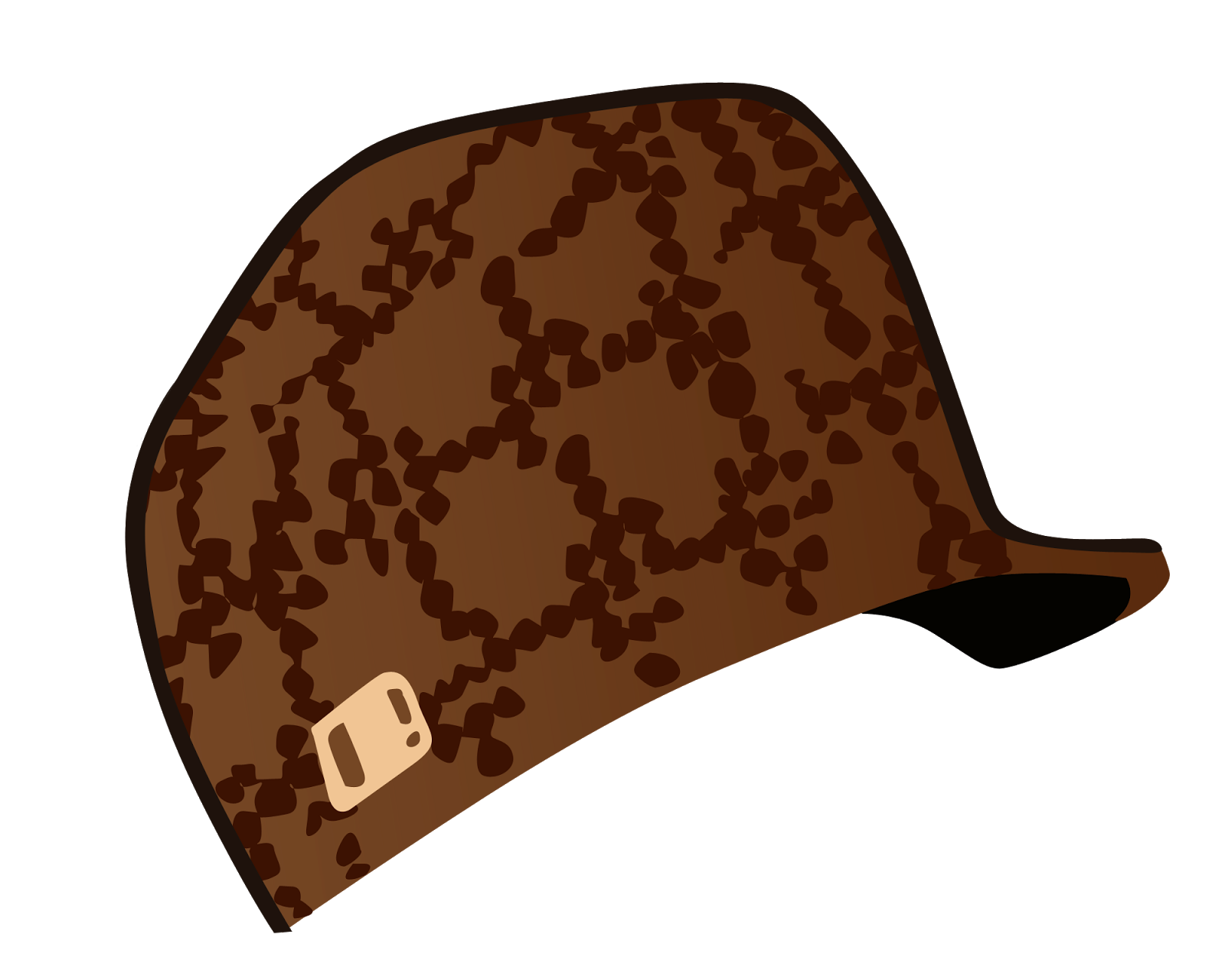

Hat on screen - Game On!
(source: http://i0.kym-cdn.com/photos/images/masonry/000/160/673/ScumbagSteveHat.png?1313097115)
Here is a partial transcript of the instructions I gave. As an exercise, try to read each instruction one at a time and imagine how you would react.
  1. OK, everybody stand up.
  2. Simon says, stand up.
  3. 'Cher says, stand up.
  4. Sit down.
  5. 'Cher says, everybody look to the left.
  6. 'Cher says, everybody look to the right.
  7. Can you feel that? We're paying with love tonight! It's not about the...I'll stop singing now.
  8. OK, look front.
  9. 'Cher says, look front.
  10. Let's take this up a notch. 'Cher says, for the next 10 instructions, when I say "stand up" you must sit down, and when I say "sit down" you must stand up. These instructions will not be preceded by "'Cher Says." Ready?
  11. Stand up.
  12. Sit down.
  13. Stand up.
  14. Stand up.
  15. Sit down.
  16. Stand up. 
  17. Sit. That was 7 instructions.
  18. Stand up.
  19. Stand up.
  20. Sit down.
  21. Stand up.
Would you have sat down on instruction 21? Well, you would have been out because that's the 11th instruction, and since I did not say "'Cher says" you had to do nothing. Only 4 students caught that trick, and they were all awarded prizes.

This game is largely limited only by your imagination, and a variety of tasks that test logic, dexterity or teamwork can be instructed to the players. I had a whole bunch of other tricks up my sleeve (e.g., "'Cher says, raise a prime number of hands." How many hands would you raise?), but didn't get to use them. In fact, I had prepared a slide with a number of random items on it (like a cake with 3 candles, a cat, etc.) and intended to show it to the players for 10 seconds. I would then give instructions based on the slide (e.g., "raise a number of fingers equal to the number of candles on the cake"). It is also possible to give instructions based on an audio clue, or get players to play little mini-games ("'Cher says, win a game of rock-paper-scissors with a person next to you." Note that the players can play more than one game!). Just make sure to phrase your instructions clearly and concisely so that there is no room for misinterpretation, and then let your inner troll run wild.

(source: http://knowyourmeme.com/memes/trollface-coolface-problem)

By the way, you know that instruction to raise a number of fingers equal to the number of candles on the cake? I didn't say "'Cher says." Did you catch that?

Tuesday, April 16, 2013

Classroom game: Werewolf

Last week, I was involved in an activity for the Ngee Ann Polytechnic Board Games Club (NPBGC). The idea was to host a game for a number of Asian Nursing students from non-English speaking countries like China, Vietnam and Myanmar. The students were divided into four groups of about 18 students each, and we had around 25 minutes with each class. Also, the game should promote communication in English (or whatever version of English we happen to speak in Singapore). Given these constraints, we pretty much immediately settled on running Werewolf.

It's clearly a family game.
(Image from http://boardgamegeek.com/image/1534745/ultimate-werewolf-ultimate-edition)
In Werewolf, the players take the roles of villagers. One morning, the villagers wake up and discover that the mayor has been murdered in the night. There are werewolves in the village! At the start of the game, every player is dealt a card that is kept secret from the other players. If your card says "villager", your aim is to kill all the werewolves before everybody gets eaten. If your card says "werewolf", your objective is to kill enough villagers until there are only as many villagers as werewolves, whereupon you rise up for an all-you-can-eat villager buffet with doggy bags. There is also a special villager called a "seer" who acts as a sort of spirit guide for the village (if she survives, that is). Finally, there is a referee controlling the action (i.e., me).

The game plays in alternating "Night" and "Day" turns. At night, all the players close their eyes. The referee then instructs, "werewolves open your eyes," so the werewolves know who their allies are on the first night. On any night other than the first, the werewolves would silently decide on one villager to kill (by pointing to her), and then they close their eyes again. The next instruction is "seer open your eyes and point to someone you wish to know about." When the seer selects a player, the referee silently indicates to the seer whether the player is a villager or a werewolf using a previously explained hand signal. Finally, the seer closes her eyes, and then day begins, whereupon the werewolves' victim is notified of her grisly fate.

During the day, the villagers get to select one among their number for lynching (isn't this game wholesome?). If a player is accused of being a werewolf and someone else seconds the accusation, then the accused gets about a minute to defend herself; here is where the ability to make a convincing argument (in English) could save your life. At the end of the defence, all the villagers vote simultaneously with either a thumbs up or a thumbs down to decide whether the accused gets to live; a majority "nay" vote and the villager is summarily executed by the mob, and then she reveals her role. If she's a werewolf, there're celebrations and congratulations all round; if she's a villager, then an innocent person has been killed by an unthinking mob, and the werewolves are that much closer to winning.

On the whole, the game was a success. At the start, I needed to prompt them a bit, but these Nursing students are a pretty canny lot and they picked up the strategies for the different roles very quickly. Early in the game, the defence put up by the accused is pretty weak (e.g., "I'm a kind person", "I'm a vegetarian", or, my personal favourite, "I am a villager"), and they're invariably toast. As the game progressed, the arguments became more elaborate and convincing. In one game, a particular student was accused twice and spared twice. Once, she saved herself by telling her accuser, "if I am a villager and you kill me, you should be killed next," which certainly gave everyone pause.

She was a werewolf. (Awesome!)

Werewolf is a combination of deduction and role-playing. If the aim is to help foster communication skills, it's  an excellent game if the referee is active in prompting for responses, e.g., "why do you think she's a werewolf?", "is that all you want to say in your defence? Remember, your life is on the line!" It's also just a fun game that is suitable for a classroom of around 20 people, just to bring people out of their shell.

Oh, and all you need to play Werewolf is a few slips of paper with the words "werewolf", "villager" and "seer" on them. The standard Werewolf is a public domain game, while Ultimate Werewolf pictured above provides cards for up to 68 (!!!) players along with several fun new roles.

Some other lessons learnt:

  • Try not to be the only male in a class full of females. Twice, the sole male was the first on lynched. Coincidence?
  • I should have put my cards in card sleeves for protection. Students tend to clutch the cards when they're excited, and I ended up with a bunch of crumpled cards. Not that I mind all that much - it's nice to see the students so emotionally invested in the game.
  • Talking non-stop for two hours is hell for the throat, especially if you're trying to keep order in the midst of flying accusations. Fun, though.


Monday, February 18, 2013

Classroom game: Wits & Wagers

At the end of my first Advanced Object-Oriented Analysis and Design (AOOAD) lessons back in October 2012, I divided the students into groups of 3 or 4 and played the party game Wits & Wagers:

Image from http://boardgamegeek.com/image/521431/wits-wagers
Wits & Wagers is a trivia game with a twist (you can get the official rules here). All the answers to the questions are in the form of numbers (e.g., In centimetres, how tall is Yao Ming?), and the questions are difficult or obscure enough that nobody is likely to know the exact answer. The participants try to guess a value that is as close to the correct answer as possible without going over, and they each write down their guess on a small erasable board,. The answers are then arranged in ascending order, and each answer is assigned a payout (e.g., 2:1 or 3:1); the highest and lowest guesses pay out more than the middle-of-the-road guesses.

Here's the clever bit: the participants then get to wager on up to two answers, and they don't have to bet on their own answer. If the answer you bet on is the closest without going over, you get the corresponding payout (the one who made the closest guess also gets 3 bonus points).

This game is essentially a multiple-choice quiz in disguise, except that the participants come up with the choices themselves. It also mitigates one of the main problems with trivia games, namely the tendency for the class genius to crush everyone else with his savant-like knowledge of trivia, because if you suspect that someone knows the answer, just bet on his answer. It's a really cool mechanic.

Like any trivia game, how fun it is depends heavily on the questions asked. Unfortunately, the questions that come with the commercial game are extremely USA-centric (will you guys go metric already???), so I came up with my own questions. I also spent some time coming up with a nice Powerpoint presentation with a ticking timer for the game (I had some problems with the sound effects though); you can download it here. The most boring question is probably Question 2, which is the only question that related directly to AOOAD, but hey, I had to toss a relevant question in there, right?

How did my students like it? Well, the response was generally positive I think. There were a few students who didn't really participate, but those who did seemed to have a good time. I might make a few changes if I do this again though. For one thing, I would allow more than 45 seconds for guessing and 30 seconds for bidding. I might also use the Wits & Wagers Party Edition rules instead, which simplifies the payout process.

All in all, the game did ok. I admit that it wasn't a great match for AOOAD, and would probably work better for a topic where more questions with numeric answers could be asked (e.g., math). I'm not teaching Computing Mathematics this upcoming semester, but I suspect Wits & Wagers would be a better fit there ("Given these 200 numbers, what is the mean? You have 45 seconds...").

Wednesday, February 6, 2013

Classroom game: Smarty Party

In the final tutorial session of the semester for my Advanced Object-Oriented Analysis and Design (AOOAD) classes, I decided to run a trivia game adapted from the commercial boardgame Smarty Party.

Image from http://boardgamegeek.com/image/72266/smarty-party?size=original

The rules are simple: I provide a category that describes a list (e.g., Best Picture Academy Award Winners 2000-2011). On their turn, each student (or team of students) has to try to name one item on the list. A student who makes a guess that is not on the list gets a number of penalty points. The sequence of penalty points is 3, 2, 2, 1, 1, 1, 1 (i.e., the first to miss gets 3 penalty points, the second gets 2, and so on). The round is over when there have been 7 misses or all items in the list have been guessed. The winner is the one with fewest penalty points at the end of the game.

For this game, I prepared a Word document with 5 lists. The colour of the text for the entries is white. When a student guesses an answer, I highlight the corresponding entry and change the text colour to black in order to reveal it. I also printed out the document so that I know which entry is which. Overall, the game took about half an hour.

The success of this game depends heavily on the categories chosen. I did my best to make sure the categories were age- and culture- appropriate because nothing is more boring than a trivia game where you don't know any of the answers, or worse yet, where you get crushed by some know-it-all. Even so, it turns out that not many of my students were movie buffs who knew about the Oscars ("no, the Fast and the Furious never won Best Picture"), so I'll probably replace that category if I run this again.

Because it's the final session for the semester, my objective was mainly to let the students have a good time, so all the categories were somewhat whimsical. I was particularly interested in the students' responses for the Teaching Award Winners category (these are second-year students) because it let me know whom they felt were good lecturers. I think some of the students were genuinely surprised that some of their favourite lecturers never won the Teaching Award. However, this game is one way that you can test the students' recall ability in class. You can conceivably ask nursing students for the warning signs of shock, or chemistry students for the first 20 elements in the periodic table. My advice, though, is to not have the entire game involve serious topics, because after the first couple the students will figure out that it's just a thinly disguised review exercise and lose interest.

For the record, the winners were...I honestly don't remember (any of my students reading this are welcome to remind me in the comments section). What I do remember is lots of laughter amid cries of "you stole my answer!" and good-natured ridiculing of desperate shots in the dark as the obvious guesses were taken. If nothing else, my students now know that the most viewed youtube videos are not necessarily the best ones. :)